Why One EU-Compliant Supplement Label May Still Not Be Enough for 27 Markets
EU supplement law is only partly harmonised. A formula that works in one Member State may still require another notification, language, warning or ingredient…
EU supplement law is only partly harmonised. A formula that works in one Member State may still require another notification, language, warning or ingredient…
EU Regulation 2026/1507 authorises fermentation-derived Rhizomucor pusillus mycelium for multiple foods and adult supplements. The new entry sets use levels, microbiological and contaminant specifications,…
A capsule can look like a food supplement and still raise medicinal-product questions. Learn how the EU assesses borderline products by presentation and function,…
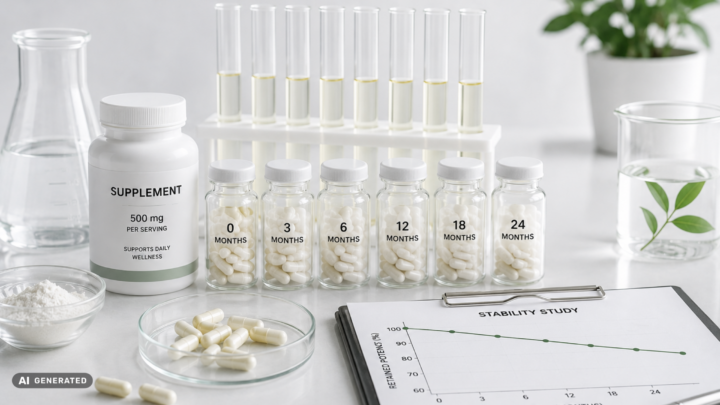
A supplement can meet its label claim on production day and still fail later. Learn why nutrient degradation, overages, packaging and real-time stability testing…
Food contaminant compliance in the EU has changed again. On 29 July 2026, the European Commission adopted Commission Regulation (EU) 2026/1825, amending Regulation (EU)…
A supplier Certificate of Analysis is valuable evidence, but it is not a complete EU compliance strategy. Learn the difference between specifications, batch COAs…